
If you are asking why is my dog licking my other dog all of a sudden, I get it. It can seem odd at first. I saw this with my own dogs one day, and it made me stop and watch them. In many cases, the reason of dog licking is simple, like care or play, but at times it can mean stress or a health issue. I first thought it was cute dog licking other dog, but it kept going and made me look close.
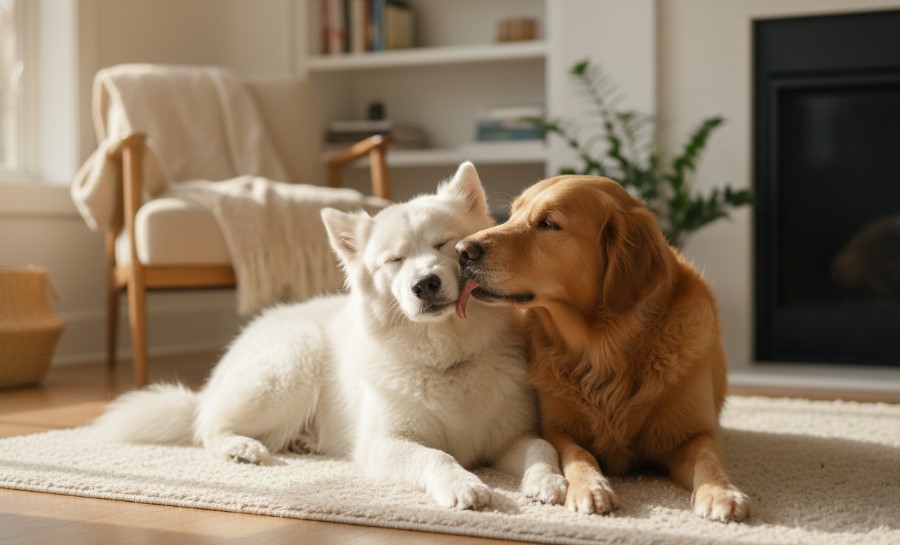
I even asked why do dogs lick each other private parts and learned it can be normal, but not always. In this guide, I will share the real cause and the best solution of dog licking all of a sudden so you know what to do next.
Is It Normal for Dogs to Lick Each Other?
Yes, in most cases, dog licking other dog is normal and safe. It is how dogs bond and stay close. Think of it like a hug in dog form.
Dogs live like a pack, so they use licking to show care and trust. I see this with my own dogs after they eat or rest. It is short, calm, and easy to stop, which shows it is fine.
Licking is also a way to clean each other. Dogs will lick the face and ears where dirt can sit. I once saw one dog clean the other’s ear right after play time.
From what I have seen, it is fine when it is light and both dogs stay relaxed. But if it goes on too long or one dog seems upset, I stop and check what is going on.
Why Is My Dog Licking My Other Dog All of a Sudden? (Main Reasons)
1. Social Bonding and Affection
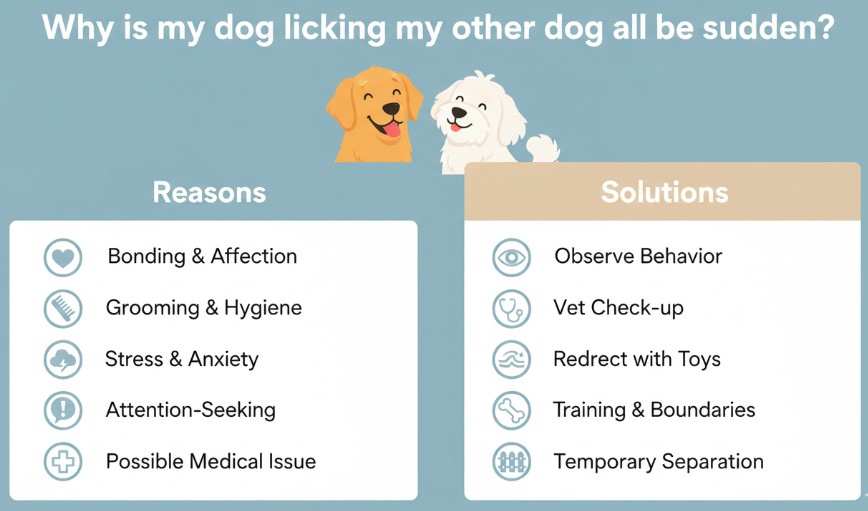
Dogs lick to bond, and this is one of the most common reasons. It is their way to say “you are part of my group.” I see this a lot when my dogs rest side by side after play. One will give a few soft licks, and both stay calm. That is a clear sign of trust and care.
2. Grooming Behavior (Natural Instinct)
Dog licking other dog is often just grooming. Dogs clean spots that are hard to reach, like the ears and face. I once saw my dog clean dirt near the other dog’s eye right after a walk. It looked small, but it showed a strong instinct to help.
3. Submission or Respect Signals
Licking can show respect, not power. A shy or young dog may lick an older dog to stay safe. I notice this when one dog keeps a low head, soft eyes, and slow moves. That body language tells me the licking is about peace, not control.
4. Stress or Anxiety
A sudden change in licking can mean stress. This is a key reason of dog licking when the home routine shifts. I saw this after a move, when one dog started to lick more than usual. It was not play. It was a way to cope with change.
5. Medical or Health Issues
Dogs may lick a spot where the other dog has pain or skin trouble. This can point to a wound, rash, or infection. I once found a small skin issue only because one dog would not stop licking that spot. That was my cue to check and act fast.
6. Attention-Seeking Behavior
Some dogs learn that licking gets a response. If you look, talk, or laugh, they may keep doing it. I made this mistake once by reacting too much, and the habit grew. When I stayed calm and gave no reward, the behavior slowly dropped.
7. Why Do Dogs Lick Each Other Private Parts?
Dogs lick private areas for scent and clean care, and this can be normal. It helps them learn about each other’s health and state. I asked the same thing once, and learned it is fine if it is brief and not constant. But if it goes on too long or looks intense, that can be a red flag to check.
When Should You Be Concerned About Dog Licking Behavior?
Dog licking becomes a concern when it is constant, intense, or linked to health issues. A few licks here and there are fine, but nonstop dog licking other dog is a sign to look closer. I always say, short and calm is normal, but long and repeated needs attention.
You should watch for clear signs that something is off. These include:
- Constant licking that does not stop
- Red skin, sores, or wet spots
- One dog trying to move away or getting upset
I once had a moment where one of my dogs kept licking the same spot on the other for hours. At first, I thought it was normal care, but the skin turned red. That was my red flag, and I checked right away.
From my experience, behavior tells a story if you slow down and watch. If the licking looks more like a habit than a quick act of care, it may point to stress, pain, or a skin issue. Trust your gut here. If it feels too much, it is worth a closer look or even a vet visit.
Solution of Dog Licking All of a Sudden (What Actually Works)
1. Observe the Pattern First
The best first step is to watch and learn the pattern. Look at when and where dog licking other dog starts. I always check if it happens after food, play, or stress. This helps you find the real trigger fast.
2. Rule Out Medical Problems
You should rule out health issues early, as they are a key reason of dog licking. Check for skin, wounds, or signs of pain. I once found a small rash only because I looked close. A quick vet visit can save a lot of stress later.
3. Reduce Stress and Anxiety
Lower stress to reduce licking that starts all of a sudden. Keep a steady daily routine with walks and play. I saw a big change when I gave my dogs more play time and calm rest time. It helped them settle and stop the habit.
4. Redirect the Behavior
You can guide your dog to a better habit with simple steps. Use a toy or a soft call to break the moment. I do this when I see the licking go on too long, and it works well without stress.
5. Training and Reinforcement
Good habits grow with reward, not force. Praise calm time and ignore the licking when you can. I made this shift, and the change was clear. Dogs learn fast when the reward is clear and fair.
6. Separate If Necessary
Short space can help if the behavior gets too much. Give each dog time apart to reset and relax. I use this when the licking turns into a loop, and it helps break the cycle in a calm way.
Real-Life Experience: What I Learned From Managing Dog Licking Behavior
A simple answer first: I learned that dog licking other dog is never “just one thing.” It can be love, stress, habit, or even a small health signal. The key is learning to read it like body language, not just behavior.
I still remember a moment at home that changed how I see it. One of my dogs started licking the other nonstop one evening. At first, I ignored it.
The other dog was not fully relaxed. That small detail mattered. It was like watching a calm river on the surface, but feeling a strong current underneath. That is when I started paying closer attention instead of guessing.
Over time, I built a simple habit. Watch first. Then act. If it is calm and short, I let it be. If it is constant or tense, I step in or separate for a bit. That balance made everything easier.
For more information visit Melody pet grooming
FAQs
Why is my dog obsessed with licking my other dog?
A dog licking other dog too much can come from stress, habit, or bonding. It may also be attention seeking. Watch for changes in behavior or health signs.
Should I stop my dog from licking my other dog?
You should allow dog licking other dog if it is short and calm. Stop it if it is nonstop, stressful, or causes skin redness, pain, or clear discomfort.
Is dog licking a sign of dominance or submission?
Dog licking other dog can show submission more often than dominance. It is usually a sign of respect, peace, or social bonding within the dog relationship.
Can licking spread infections between dogs?
Yes, dog licking other dog can spread infections in some cases. Skin issues, parasites, or open wounds can pass through saliva, so monitor both dogs closely.
How do I stop excessive dog licking behavior?
To stop dog licking other dog, find the cause first. Then use training, reduce stress, redirect attention, and separate dogs briefly if the behavior becomes obsessive.
Conclusion
Most cases of dog licking my other dog all of a sudden are normal. It is usually bonding, grooming, or stress. The key is to watch the pattern instead of worrying too fast.
From my own experience, I learned dogs always “talk” through behavior. Short licking is often fine, like a soft sign of care. But nonstop licking can mean stress, pain, or a skin issue that needs attention.
Think of it like a signal, not a problem right away. Watch when it starts, how long it lasts, and how your dogs react. That gives you the real answer.
My simple rule now is: observe first, act only if it feels off. That has helped me avoid stress and catch real issues early.
Stay calm, stay observant, and trust what you see. If something feels unusual, a quick vet check is always a smart step.