
If you’ve ever wondered why does my cat hate being brushed, you are not alone, and I’ve been there too with my own cat. At first, I thought it was just bad behavior, but I slowly realized there was more going on beneath the fur. Brushing should feel gentle, like a soft morning breeze, yet for many cats it feels like stress or discomfort. In my experience, small changes like the right brush for cats that hate to be brushed made a huge difference over time.
I also discovered simple steps and a real solution of cat hate being brushed that actually works with patience. So in this guide, I’ll walk you through what I learned and also answer why does my cat hate being brushed so much in a way that finally makes sense.
Why Does My Cat Hate Being Brushed?
Many cat owners ask me the same thing: why does my cat hate being brushed? The short answer is simple. Most cats are not being “difficult.” They are reacting to discomfort, fear, or stress in their own way. I learned this the hard way with my own cat, who used to run away the moment I picked up a brush. Let’s break down the real reasons in a clear way.
Skin Sensitivity and Overstimulation
Cats have very thin and sensitive skin. This is the simple reason brushing can feel too intense for them. In many cases, what we think is gentle brushing can actually feel like scratching to a cat. Some cats also get overstimulated very fast, especially on the back or belly. From my experience, my cat would twitch and walk away after just a few strokes. I later realized it was not anger it was too much sensation at once.
Cats may hate brushing because their skin reacts strongly to even light touch.
Wrong Brush Type
A very common reason is using the wrong tool. Hard, sharp, or rough brushes can pull fur and hurt the skin. This is where many owners struggle. Not all brushes work for all cats. A tool that works for one cat may feel painful for another. I made this mistake too. I once used a stiff brush thinking it would remove loose fur faster. Instead, my cat avoided me for days. That’s why choosing the right brush for cats that hate to be brushed is often the first real step toward improvement.
A wrong brush can turn grooming into discomfort instead of care.
Lack of Early Training
Cats that are not introduced to grooming early in life often see it as something strange or threatening. Kittens who grow up with gentle brushing usually accept it more easily. But adult cats without that experience may resist strongly. I noticed this clearly. My cat had no early grooming exposure, so every brush session felt unfamiliar to him.
No early training can make brushing feel like an unknown and stressful activity.
Negative Past Experience
One bad experience is often enough to create long-term fear. If a cat was brushed too hard, held down, or scared during grooming, it remembers that moment. Next time, it reacts even before the brush touches its fur. In my case, one rushed grooming session created weeks of avoidance. It took time and patience to rebuild trust again.
A single painful grooming moment can lead to long-term brushing fear.
Stress or Anxiety
A cat’s mood and environment matter more than we think. Stress makes even small actions feel overwhelming for them. Loud sounds, new spaces, or changes at home can make brushing harder to accept. I noticed my cat tolerated brushing better on quiet days, especially when the house was calm and predictable.
Stress lowers tolerance, making brushing feel uncomfortable or unsafe.
My Personal Experience With a Cat That Hated Brushing
My answer to why my cat hated brushing came from real life. At first, I thought brushing was simple. Just pick a brush and start. But my cat did not agree. Each time I tried, he pulled away fast. I still remember one moment. I touched his back with the brush, and he jumped off at once. I thought he was being difficult. Later, I understood the truth. He was not comfortable. The brush felt too harsh for him. I made a few mistakes. I brushed too fast. I tried long sessions. I even used a rough brush and held him still. That only made him fear the brush more. Soon, he would run away when he saw it. Things got better when I slowed down. I used a soft brush and kept sessions very short. I chose calm times, like after meals. The change took time, but it worked. I learned to build trust first.
Solution of Cat Hate Being Brushed
The simple answer to solution of cat hate being brushed is this. Do not force your cat. Go slow. I learned this after many failed tries with my own cat. When I changed my approach, things got better. The short answer is simple. Small steps build trust.
Choose the Right Brush
Start with the right tool. A soft brush or grooming glove works best for many cats. Some cats do not hate brushing itself. They hate how it feels. A rough brush can feel sharp on their skin. I saw this with my own cat. He reacted less when I used a soft tool. He stayed longer near me.
A soft brush for cats that hate to be brushed reduces fear and discomfort.
Start Slow and Short Sessions
Keep sessions very short at first. One or two minutes is enough. Cats do not like long handling. They feel safe with small steps. I started with just a few strokes. Then I stopped. This helped my cat stay calm.
Short brushing helps your cat feel safe and not stressed.
Positive Reinforcement
Give something good after brushing. A treat or soft voice works well. Cats learn from reward. They repeat what feels good. I gave my cat a small treat each time. He slowly stopped running away.
Rewards help your cat connect brushing with good feelings.
Brush at the Right Time
Pick calm moments. After food or play is best. A tired cat is more open to touch. A stressed cat is not. I noticed better results after meals. My cat stayed still longer.
Calm timing makes brushing easier for your cat.
Build Trust Over Time
Do not rush this process. Trust grows slowly. Each good moment helps your cat feel safe. Each bad moment can break it. With time, my cat stopped resisting. It became part of his routine.
The real solution of cat hate being brushed is patience and trust.
Best Brush for Cats That Hate to Be Brushed
The simple answer to best brush for cats that hate to be brushed is this: there is no single perfect brush for every cat. I learned this after trying a few types with my own cat. The right tool depends on comfort, not speed. When the brush feels safe, everything gets easier. The short answer is simple: comfort decides success.
Grooming Glove
A grooming glove is often the easiest start for sensitive cats. It feels more like a hand stroke than a tool. This is why many cats accept it faster. The soft silicone tips gently catch loose fur while your hand moves naturally. I used this first when my cat refused everything else. It worked better than I expected. He did not run away as fast, because it felt like normal petting.
A grooming glove is a good brush for cats that hate to be brushed because it feels like touch, not grooming.
Soft Slicker Brush
A soft slicker brush helps remove loose fur and small tangles. But it must be used gently. Some cats accept it once trust is built. Others need time before they allow it. I saw this with my cat later. After weeks of slow grooming, he started to tolerate this brush for short moments. Think of it like learning to accept a light comb through soft hair. Not fast, but steady.
A soft slicker brush works when your cat slowly builds trust with brushing.
Rubber Bristle Brush
A rubber bristle brush is very gentle. It is soft and flexible, so it does not pull fur. It also gives a light massage effect. This helps some cats relax during grooming. In my experience, this brush worked best on days when my cat was already calm. It did not scare him like harder tools did.
A rubber brush is useful because it reduces pulling and feels like soft massage.
Why Each Brush Works Differently
Each brush works in a different way because every cat reacts differently. Some cats fear pressure. Some fear noise. Some fear movement. So one tool cannot fit all. I learned this slowly. My cat rejected one brush but accepted another without warning. It was not about the brush alone. It was about how it felt in that moment. So the real solution of cat hate being brushed is matching the tool with your cat’s comfort level.
Different brushes work differently because every cat has a different comfort limit.
Signs Your Cat Truly Dislikes Brushing
The simple answer to why your cat avoids brushing is often visible in body language. Cats rarely “say no” with sound first. They show it with their body. I learned this clearly with my own cat. At first, I missed these signs and thought he was just playful. But the short answer is simple: their body always tells the truth.
Tail flicking
Tail flicking is one of the first warning signs. It means your cat is getting irritated or overstimulated. The short answer is this: a moving tail is not relaxed, it is reacting. I saw this with my own cat many times. At first, his tail would move slowly. Then it became faster. That was my clue to stop. I learned that when the tail starts talking, brushing time is already too long. Think of it like a warning light on a car. It shows something is not right before the problem grows.
Tail flicking means your cat is losing comfort during brushing.
Ear flattening
Flattened ears are a clear stress signal. It means your cat is not enjoying the moment. The short answer is simple: ears go back when your cat feels unsure or stressed. I noticed this during early brushing attempts. My cat’s ears would slowly move back when the brush came close. I ignored it at first, and that made things worse. Once I learned this sign, I stopped immediately when I saw it. That small change made brushing less stressful for him. Think of it like someone pulling their head back when they are uncomfortable with touch.
Flattened ears show your cat is uncomfortable and wants space.
Hiding or running away
This is one of the clearest signs. If your cat hides or runs, brushing is already a negative experience for them. The short answer is simple: avoidance means fear or discomfort. I still remember this with my cat. He would disappear under the bed the moment he saw the brush. At first, I thought it was funny. Later, I realized it was trust breaking down. When a cat avoids you, it is not being rude. It is protecting itself from something it does not like. This is also where the real solution of cat hate being brushed starts by stopping force and rebuilding trust.
Hiding or running means your cat is avoiding brushing completely.
Growling or biting
Growling or biting is the strongest warning. It means your cat has reached its limit. The short answer is clear: this is full refusal, not mild discomfort. I experienced this once when I pushed too far. My cat gave a low growl and moved away quickly. That moment taught me a hard lesson. I was not respecting his limits. Cats do not want to hurt. They want space. When they bite or growl, it is their last message. Think of it like a loud “stop” after many small warnings.
Growling or biting means your cat is fully rejecting brushing at that moment.
Common Mistakes Cat Owners Make
The simple answer to common mistakes in cat brushing is this: most problems come from rushing, not from the cat itself. I learned this the hard way with my own cat. I thought I was helping, but I was actually making brushing harder for him.
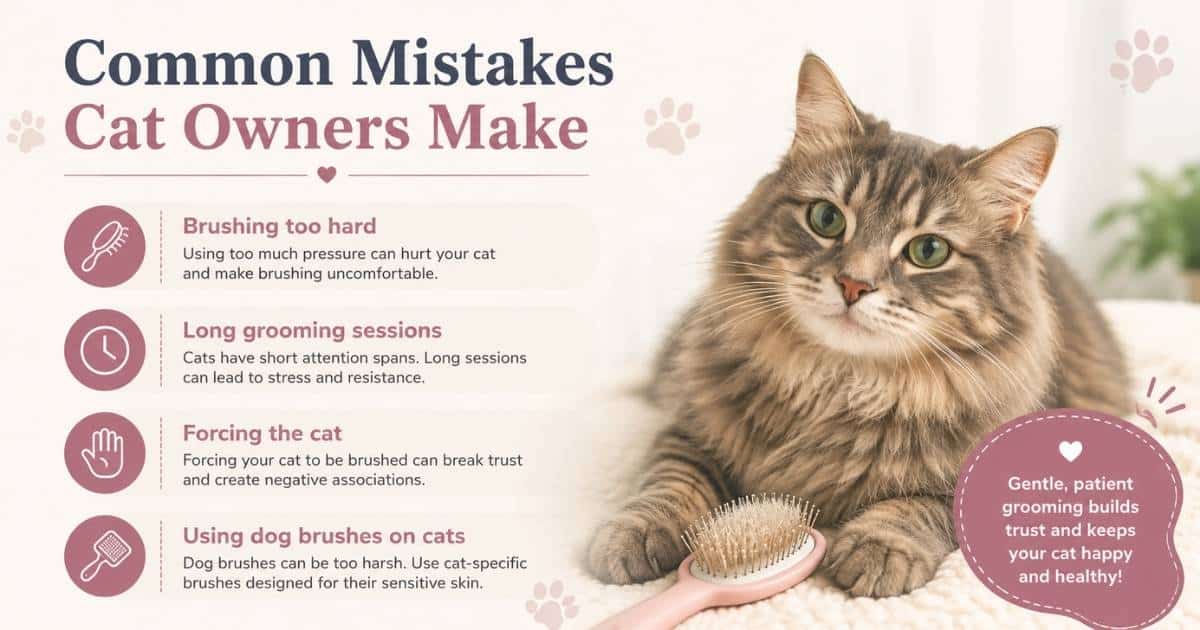
The short answer is simple: small mistakes can break trust.
Brushing too hard
Brushing too hard is one of the biggest mistakes. Many owners think more pressure removes more fur, but it often does the opposite. The short answer is this: hard brushing feels like scratching, not grooming.
I made this mistake early on. I pressed too much, thinking it would be more effective. My cat reacted fast and moved away. Later, I realized gentle strokes worked far better than force. Think of it like combing wet hair. If you pull too hard, it hurts. Cats feel that even more.
Too much pressure turns brushing into discomfort instead of care.
Long grooming sessions
Long brushing sessions can overwhelm cats very quickly. Even if the brush is good, too much time can create stress.The short answer is simple: cats prefer short, safe moments over long sessions. I used to try finishing everything in one go. My cat would start fine, then slowly get irritated. Now I know he was just tired, not difficult. Cats live in short comfort windows. Once that window closes, they want space again.
Long sessions make cats lose patience and trust.
Forcing the cat
Forcing a cat is one of the fastest ways to break trust. Holding them down or pushing through resistance only increases fear. The short answer is clear: force creates fear, not learning. I once tried holding my cat still, thinking he would “get used to it.” Instead, he avoided me for days. That moment changed how I see grooming. Cats are not meant to be controlled. They are meant to be guided gently. This is where the real solution of cat hate being brushed matters most respect their limits first.
Forcing a cat turns brushing into a negative experience.
Using dog brushes on cats
Using the wrong tool is a very common mistake. Dog brushes are often too rough or too large for cats. The short answer is simple: wrong tools create wrong experiences. I tried this once without thinking. The brush felt fine for a dog, but too strong for my cat. He did not stay still for even a few seconds. Cats need softer, lighter tools like a grooming glove or soft brush made for their coat. Think of it like using shoes that don’t fit. You can walk, but it feels wrong the whole time.
Dog brushes can be too harsh and make cats dislike grooming.
When to Be Concerned
The simple answer is this: sometimes brushing trouble is not behavior. It can be a health issue. I learned this when my cat changed fast. One day brushing was fine. Next day it was not. So the short answer is simple: sudden pain needs attention.
Skin pain or parasites
Skin pain or parasites can make brushing hurt. The short answer is this: sore skin reacts fast to touch. I saw this once with my cat. He suddenly pulled away when I touched one spot. At first, I thought it was mood. But it was not. The skin looked a bit red later. Fleas or small skin bugs can also cause this. They make the skin itchy and weak. Even soft brushing can feel sharp. Think of it like touching a small cut on your skin. Even a light touch feels strong.
Short answer: If brushing hurts in one area, check skin and parasites.
Matted fur causing discomfort
Matted fur means tight knots in the coat. The short answer is simple: knots pull the skin and cause pain. I once helped a cat with long fur. On top it looked fine. But under the fur, there were hard knots. When brushing started, the cat moved away fast. These knots often form under legs or behind ears. These spots are very soft. So pulling there hurts more. Think of it like hair tied in a tight knot. Pulling it is not nice at all.
Short answer: Matted fur can make brushing painful and hard.
When to consult a vet
The simple answer is this: see a vet if brushing pain does not stop or gets worse. I learned this after I waited too long once. I thought it was just fear. But the problem stayed. The vet found a small skin issue.
Go to a vet if you see:
- Sudden strong pain
- Red or sore skin
- Bald spots
- Constant scratching
- No change with soft brushing
A vet can find the real cause fast. That saves stress for both you and your cat. Think of it like a warning light. You don’t ignore it—you check it.
If pain stays, a vet check is the best step.
FAQs
Why does my cat hate being brushed so much?
Cats hate brushing because of skin feel, fear, or wrong brush use. This is very common. Many cats have soft skin. So even light brushing can feel too strong. Some cats also remember bad grooming. That makes them avoid it again.
What is the best brush for cats that hate grooming?
The best brush for cats that hate grooming is a grooming glove or soft brush. A grooming glove feels like petting. A soft slicker brush also works well. Both are gentle and reduce stress during brushing.
How do I fix a cat that hates brushing?
You fix it by using slow steps, soft tools, and rewards during brushing. Start with one or two strokes. Give treats after. Keep sessions short. Over time, your cat builds trust and accepts brushing.
Can brushing hurt my cat?
Yes, brushing can hurt if the brush is hard or fur is tangled. Wrong tools or strong pressure can pull skin. Mats in fur can also cause pain. Always use soft brushes and gentle moves.
How often should I brush a cat that dislikes grooming?
Brush a cat that dislikes grooming two to three times per week for short time. Keep it very short, like one or two minutes. Focus on comfort, not speed. Slow routine builds trust over time.
Conclusion
Most cats dislike brushing because it can feel strange, rough, or unsafe at first. I learned this from my own cat, and it took time to understand what he was really showing me. At the beginning, I thought brushing would be easy. I was wrong. My cat kept moving away and showing stress. I used to think he was just being stubborn, but later I realized he was uncomfortable, not difficult. The solution was simple, but it needed patience. I switched to a soft brush, kept sessions very short, and stayed gentle. I stopped forcing it and started watching his reactions instead. That made a big difference. Some days went well, and some did not. That is normal. Cats do not adjust quickly, and trust builds slowly over time.
Now my cat is much calmer with brushing. He still has limits, but he is no longer scared like before. The biggest lesson I learned is simple: go slow, be kind, and let your cat feel safe first.