
If you’ve ever wondered why do my cats lick each other and then fight, you’re not alone. I used to watch my cats grooming each other so sweetly, and then suddenly boom, they’d start wrestling. At first, it felt confusing and a bit worrying. But over time, I realized this behavior is more common than it looks. Cats licking each other often shows bonding, but it can quickly shift due to mood or signals. In this guide, I’ll share the real reason of cats lick each other and then fight, along with simple ways to handle it.
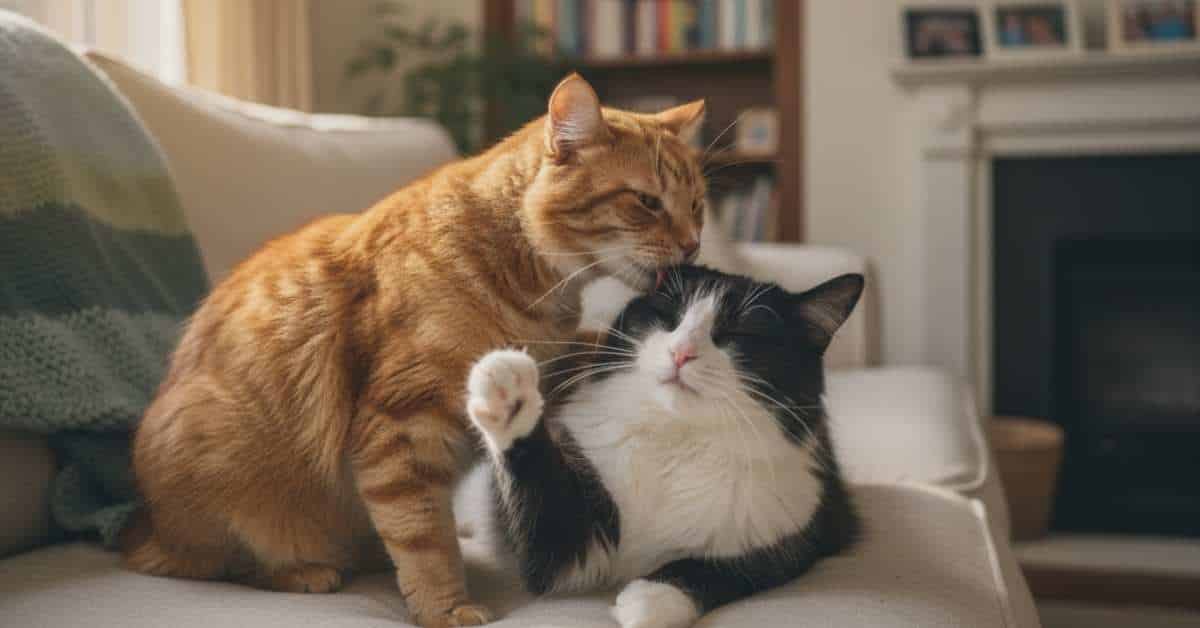
If your cats do this too, you’ll finally understand what’s going on and what you can do next.
Why Do Cats Lick Each Other?
Cats lick each other to bond and feel safe. This is called allogrooming. It means they trust each other. I see my cats do this when they rest or sit close. It is their soft way to say, “you are mine.” Cats also lick to help clean spots they cannot reach. The head and neck are hard to clean alone. So one cat helps the other. My cats take turns, and it feels like a small team at work.
Cats licking each other also builds a shared smell. This group scent helps them feel like one family. It can lower stress and stop fights before they start. From what I see, slow and gentle grooming means peace. When cats stay soft and quiet, things are going well between them.
Why Do My Cats Lick Each Other and Then Fight?
Cats lick each other and then fight because grooming can turn into play, stress, or control. I saw this many times at home. One moment looks sweet, and the next moment turns rough. It is a quick shift, not a strange one.
Play Turns Into Aggression
Cats often start with grooming and then move into play. Play can turn rough if energy rises too fast. I notice my cats begin with soft licks, then paws come out, then chasing starts.
Signs it is still play:
- No loud cries
- Loose body
- They stop and restart
Signs it is turning into a fight:
- Fast swatting
- One cat backs away
- Ears go flat
Overstimulation
Too much licking can annoy a cat. Some cats enjoy only a short time of grooming. After that, they react. One of my cats allows a few licks, then suddenly swats.
Dominance Behavior
Cats may lick to show control. One cat takes the lead, and the other may not like it. This can cause a clash. I see this when one cat keeps licking the head of the other, even when the other tries to move away.
Miscommunication Between Cats
Cats do not always read each other well. One cat thinks it is bonding, the other thinks it is too much. This mix-up can lead to a fight.
Underlying Stress or Tension
Stress can make cats react fast. Small changes can build hidden tension. New pets, noise, or routine shifts can play a role. I noticed more fights when I changed feeding time.
From my view, this pattern is like a spark. Grooming starts as a soft moment, but one small trigger can flip the mood fast.
Is It Normal for Cats to Lick Each Other and Then Fight?
Yes, this is often normal. Cats lick each other and then fight when play or mood shifts. I see this at home a lot. It starts soft, then turns rough in a few seconds. The short answer is this: it is normal if both cats stay safe and stop fast. My cats may swat or chase, then pause and act fine again. That shows it is just play.
It is not normal if one cat looks scared or tries to run away. Loud hissing, stiff body, or long chasing are signs of a real fight. I step in when one cat does not stop.
From what I see, the end tells the truth. If both cats relax after, it is fine. If tension stays, then it needs care.
How to Tell if It’s Play or a Real Fight
You can tell if it is play or a real fight by watching body signs and sound. I had to learn this the hard way with my own cats. At first, every fast move looked scary. But once I paid close attention, the signs became clear.
Play looks soft and short. My cats take turns and do not try to hurt each other. They may roll, tap, and pause.
Signs of play:
- No loud screaming
- Bodies stay loose
- They stop and start again
A real fight looks tense and one-sided. One cat may try to run, while the other keeps chasing. I step in when I see this shift.
Signs of real aggression:
- Hissing or growling
- Fur stands up
- One cat tries to escape
The short answer is this: a real fight has fear and no pause. From what I see, play is like a game with rules, but a fight is like a storm with no control. If both cats stay equal and stop on their own, it is fine. If not, it needs action.
Solution of Cats Lick Each Other and Then Fight
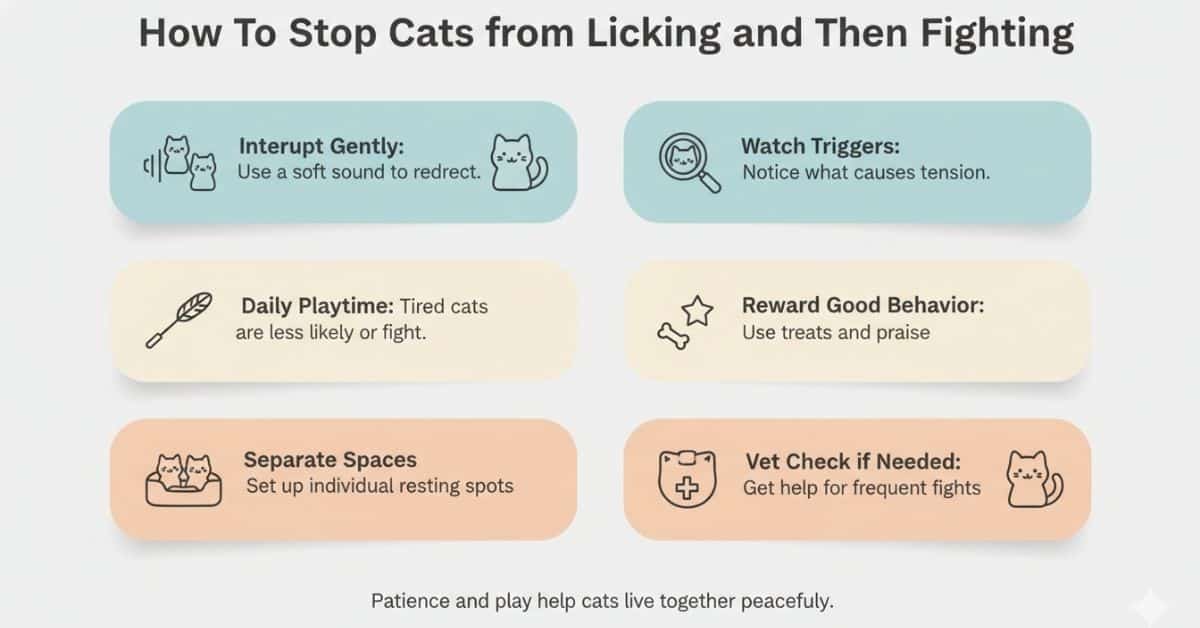
The best solution of cats lick each other and then fight is to guide their energy and stop tension early. I learned this step by step with my own cats. Small changes made a big difference in how they act.
1. Interrupt Gently Before It Escalates
The short answer is: step in early with a soft break. I use a light sound or clap to distract them. It stops the moment without stress. Avoid harsh action, as it can add more tension.
2. Provide Enough Playtime
The short answer is: tired cats fight less. I play with my cats every day to burn extra energy. When they use that energy in play, they stay more relaxed with each other.
3. Create Separate Spaces
The short answer is: give each cat its own safe spot. I set up small areas where each cat can rest alone. This helps when one cat needs space after too much contact.
4. Watch for Triggers
The short answer is: notice what starts the shift. I pay close attention to when grooming turns rough. It could be time, mood, or place. Once I saw the pattern, I could act before it grew.
5. Use Positive Reinforcement
The short answer is: reward good behavior. I give treats or praise when my cats stay gentle with each other. This helps them learn what is okay.
6. When to Seek Vet Help
The short answer is: get help if behavior changes fast. If fights grow worse or happen often, there may be a deeper issue. A vet can check for pain or stress that is not easy to see. From my experience, the solution is like guiding a small fire. If you watch early and act with care, it stays under control and does not grow into a bigger problem.
FAQs
Why do cats lick each other?
Cats lick each other to bond, clean, and share scent. This is called allogrooming. It shows trust and helps cats feel safe in the same space.
Is it normal for cats to fight after grooming?
Yes, it is often normal. Cats lick each other and then fight when play shifts fast. It is usually harmless if they stop and relax soon after.
Should I stop my cats from licking each other?
No, do not stop it fully. Cats licking each other is normal bonding. Only interrupt if it turns rough or leads to stress or fights.
How do I stop my cats from fighting after grooming?
Interrupt early with a soft sound. Give more play time daily. Keep separate resting spaces. This helps reduce tension between cats.
Do bonded cats fight like this?
Yes, bonded cats can still fight sometimes. It is normal if it is short and playful. It is a concern only if fear or stress stays after.
Conclusion
Cats licking each other and then fighting is usually normal. The short answer is this: it is often just play or a fast mood change, not a serious issue. I see this with my cats too. A calm grooming moment can turn into a quick chase, then stop again. Most of the time, it is fine if both cats settle down soon. The short answer is this: if they relax after, there is no harm. It is like a short argument that ends fast and is forgotten.
From my experience, the key is how it ends. The short answer is this: no fear and no long chase means it is okay. I learned to focus more on the ending than the start. A simple tip is this: stay calm and act early. A soft sound or small distraction can break the tension before it grows.
You can learn more about Should i wipe my cats bum after poop to know about this.