
If you’ve ever tried to groom a cat, you already know it’s not as simple as it sounds. One wrong move and suddenly you’re dealing with scratches, jumping, and pure chaos. I’ve been there more times than I can count, which is why learning how to restrain cat for grooming completely changed my routine. Over time, I found that gentle handling and the right approach matter more than force. A soft towel wrap or a simple cat restrainer can make things calm and safe for both of you.
In my experience, understanding how to safely restrain a cat is less about control and more about trust. Even for a bath, knowing how to restrain a cat for a bath can turn a stressful moment into something manageable. If you’re struggling like I once did, I’ll walk you through simple methods that actually work in real life.
Why Proper Cat Restraint Matters During Grooming
Proper cat restraint is very important during grooming. It keeps you and your cat safe. When I first learned how to restrain cat for grooming, I saw this clearly. My cat used to scratch when I tried too fast. Good restraint stops scratches and bites. It also protects the cat from injury. A small slip can hurt a paw or skin. That is why a soft towel or cat restrainer helps a lot.
It also lowers stress for the cat. A steady hold gives a sense of control. When I learned how to safely restrain a cat, my cat stopped fighting as much. It stayed still for short grooming time. Grooming also becomes faster and easier. You do not waste time chasing the cat. Even how to restrain a cat for a bath becomes simple with a calm hold. Over time, it builds trust. The cat starts to feel safe with your touch. That is the real goal of good restraint.
Understanding Cat Behavior Before You Restrain Them
Understanding cat behavior is the first step before any grooming. In simple terms, you should never try how to restrain cat for grooming without reading your cat’s mood first. Cats always show small signs before they react.
Signs of stress in cats are easy to notice if you slow down.
Tail flicking is one of the first signs. Hissing is a clear warning. Hiding under a bed or a corner means the cat is not ready. I learned this when my cat froze and stared at me right before grooming. That moment told me everything.
Forcing restraint can make things worse very fast.
If you grab a stressed cat, it will fight harder. It may scratch or bite just to escape. In my experience, pushing too soon turns a simple grooming task into a full struggle. That is why learning how to safely restrain a cat always starts with patience, not force.
A calm environment changes everything.
Cats react strongly to noise, fast movement, and sudden touch. A quiet room, soft light, and slow steps make a big difference. Even restraining a cat for a bath becomes easier when the space is quiet and predictable. Think of it like trying to read in a noisy market—it just does not work.
From my own experience, behavior comes before action.
I once tried grooming my cat while it was already tense. It ended badly. Now I watch body language first. When the tail relaxes and the ears are normal, grooming goes more smoothly. This small habit changed everything for me and made restraint safer and simpler.
How to Safely Restrain a Cat
Safe cat restraint is simple when you go slow. In short, how to restrain cat for grooming works best when you break it into small steps. I learned this after many failed tries where rushing only made my cat more reactive.
Create a Calm Environment
A quiet space is the base of safe restraint. In simple words, your cat cannot settle if the room is loud or busy. Pick a quiet room with no TV, no loud voices, and no sudden movement. Close doors so the cat does not run away mid-grooming. Remove toys or distractions that can trigger play mode. I noticed my cat acts like a “small alarm system” in noisy places—one sound and everything starts again. A calm space also supports how to safely restrain a cat without stress buildup.
Use Gentle Handling Techniques
Gentle hands reduce fear and resistance. The goal is control without pressure or fear.Always support the cat’s body with both hands. One under the chest, one under the back area if needed. Never grab the neck, legs, or tail. That only creates panic. From my experience, slow and steady touch works like a “soft signal” that nothing bad is coming. This is also important when learning how to restrain a cat for a bath, because sudden grip leads to struggle fast.
Use a Towel Wrap (Cat Burrito Method)
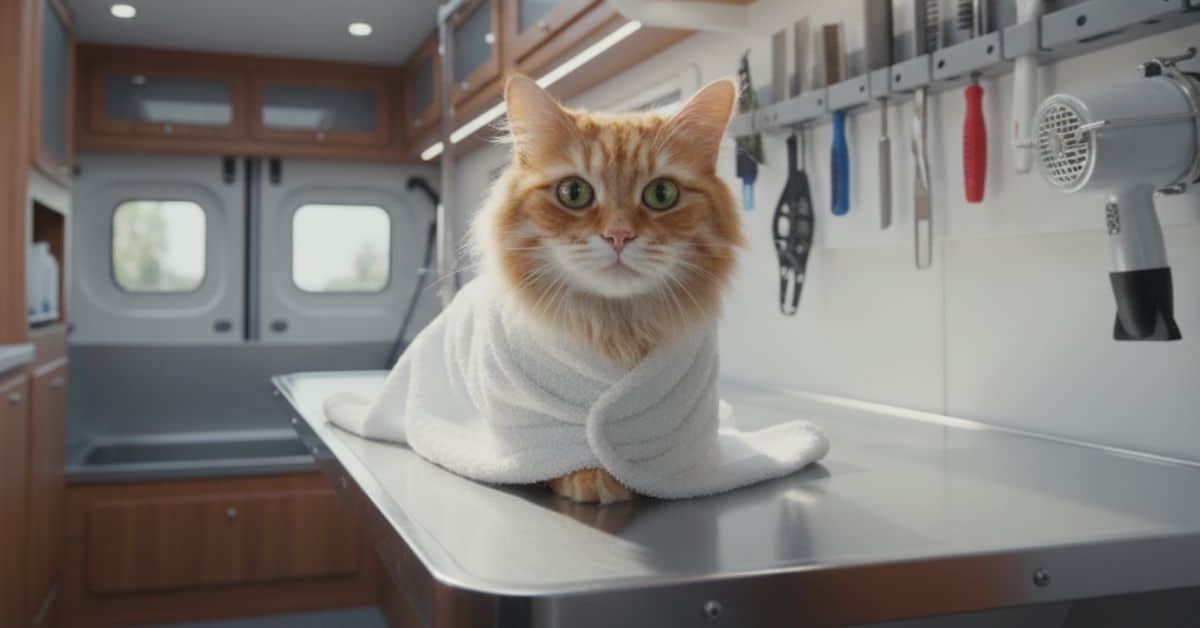
A towel wrap is one of the safest ways to limit movement. It works like a gentle “boundary” that keeps the cat secure. Place a soft towel flat on a surface. Put the cat in the middle. Wrap one side over the body, then the other side, like a soft roll. Keep the hold snug but never tight. Leave the head out only if needed for grooming.
I use this when my cat becomes restless. It feels like wrapping a baby in a blanket—simple, controlled, and safe. This method is often the easiest answer to how to restrain cat for grooming without force.
Keep Sessions Short
Short grooming sessions reduce stress for both sides. Long handling usually leads to resistance and escape attempts. Work in small steps. Brush a little, then pause. Trim a small area, then stop. Give breaks if the cat moves too much. I learned that my cat behaves better in 5-minute sessions than long ones. It is like reading a book in short pages instead of one long stretch. This approach also makes restraint easier to repeat. Over time, short sessions build comfort, trust, and smoother grooming without struggle.
Best Tools and Cat Restrainers for Grooming
The right tools make grooming much easier. In simple terms, how to restrain cat for grooming is not only about technique, it is also about using the right items. I learned this after struggling with just my hands and getting nowhere fast.
Cat Grooming Gloves
Grooming gloves help you handle cats with less risk. They protect your hands while still letting you brush or hold the cat. These gloves are useful when your cat moves a lot. The soft rubber tips help control light scratching. I started using them after one bad grooming session where my hand got scratched mid-brush. Now I use them for quick grooming touch-ups. They are also helpful when learning how to safely restrain a cat without making it feel trapped.
Think of them like a “soft shield.” You stay safe, and the cat still feels your hand.
Soft Towels
A soft towel is one of the most useful grooming tools. It is simple, cheap, and very effective. Towels help with the “cat burrito” wrap, drying after baths, and gentle restraint. In my experience, a towel often works better than fancy tools. When I first tried how to restrain a cat for a bath, the towel was the only thing that kept things under control. It works like a soft boundary. The cat cannot move wildly, but still feels covered and safe.
Cat Restrainer Bags (When Necessary)
Restraint bags are used for strong or highly active cats. They are not for every situation, but they help in difficult cases. These bags limit movement while allowing access to specific grooming areas like nails or ears. I only use them when nothing else works. Some cats panic easily, so this tool can reduce injury risk for both sides.
From my experience, it is like a “temporary safety net.” Useful, but only when needed.
Nail Trimming Aids and Grooming Combs
Basic grooming tools make a big difference in restraint success. Nail cutters and combs reduce grooming time, which reduces stress.Sharp nail trimmers help finish quickly, so the cat does not stay restrained for long. Combs help remove loose fur before it turns into mats. I noticed that when grooming is faster, my cat stays calmer and easier to handle.
It is simple math: less time held = less stress.
How to Restrain a Cat for a Bath Without Stress
Bath time needs good prep. In simple words, how to restrain cat for grooming works best when you set everything before you start. I learned this after one messy bath where I forgot the towel, and my cat escaped halfway.
Preparation Before Bath (Water, Shampoo Ready)
Good prep stops panic in cats. A bath should start only when everything is ready. Keep warm water ready. Keep shampoo open. Keep a towel close. Do not leave the cat waiting. I noticed my cat gets nervous when I move around too much before starting.
This step helps with how to safely restrain a cat because less delay means less fear. Think of it like starting a trip. If bags are ready, the journey is smooth.
Gentle Holding Technique in Sink or Tub
Soft hold works better than tight grip. You guide the cat, not force it. Place one hand under the chest. Use the other for support. Keep the cat close to your body. Talk softly. The voice helps more than pressure. My cat stays calmer when I hold it steady, not tight. This also helps with how to restrain a cat for a bath, since sudden movement causes stress. Think of your hands like support rails, not traps.
Using Non-Slip Mats
A stable surface reduces fear. Cats panic when they slip. Put a rubber mat or towel in the tub. This gives grip under the paws. I saw a big change when I started using one. My cat stopped trying to jump out right away.
This small step improves how to restrain cat for grooming during baths. It is like walking on solid ground instead of wet glass.
Common Mistakes to Avoid
Most grooming problems come from small mistakes. In short, how to restrain cat for grooming goes wrong when we rush or ignore cat signals. I learned this after a few stressful grooming sessions.
Forcing the cat too tightly is a big mistake. It does not give control. It only increases fear. My cat used to struggle more when I held too hard. Gentle support always works better. This is part of how to safely restrain a cat without stress.
Ignoring warning signs also causes trouble. Tail flicking, hissing, or freezing means stop. I once ignored these signs, and it ended with scratches and escape. A noisy or slippery space makes cats nervous. Loud rooms or wet floors increase panic. A quiet, stable place helps a lot, especially for how to restrain a cat for a bath. Long grooming sessions also backfire. Cats do better in short steps. I now groom in small breaks, and my cat stays much calmer and easier to handle overall.
Signs Your Cat Is Too Stressed to Continue Grooming
A stressed cat shows clear signals fast. In simple terms, if your cat is overwhelmed, you should stop grooming right away. I learned this the hard way when my cat went from quiet to full panic in seconds. Heavy breathing or panting is one of the first red flags. It usually means your cat is no longer relaxed. I once saw my cat breathe fast after just a few minutes of brushing. That was my sign to pause immediately. This is a key point in how to safely restrain a cat during grooming.
Aggressive scratching or biting is another strong warning. It is not “bad behavior” in that moment. It is pure defense. I still remember a time when I ignored this sign, and my hand got scratched badly. That taught me to respect the warning. Trying to escape again and again is also important. If your cat keeps twisting, jumping, or pushing away, it means the stress level is too high. Think of it like holding water in your hands. The tighter you try, the faster it slips away. The rule is simple. If you see two or more of these signs, stop grooming immediately. Give space. Let your cat reset. Grooming should never feel like a fight.
My Personal Experience with Cat Grooming Restraint
A real grooming moment taught me how to restrain cat for grooming the hard way. In simple terms, I learned it from mistakes, not books.
I once tried to groom a quiet cat at home. It looked relaxed at first. I thought it would be easy. But the brush touched the fur, and the mood changed fast. The cat twisted and tried to run. That was my first clear sign that timing matters more than tools. What worked was slowing down. I used a soft towel wrap. I held the cat close but not tight. I also spoke in a low voice. When I stopped forcing control, the cat stopped fighting so hard. This showed me how to safely restrain a cat in a gentle way. The lesson is simple. Go slow. Watch the cat first. Then act. This small change made grooming easier and much safer for both of us.
Tips to Make Grooming Easier Over Time
Making grooming easy takes time. In short, how to restrain cat for grooming becomes simple when you build habits step by step. Start early if you can. Kittens learn fast. I saw this with a young cat I cared for. It got used to brushing like normal daily care. Use small rewards. Give a treat after a short grooming step. Even one minute is enough in the start. This helps the cat link grooming with something good.
Keep sessions short. A few minutes is enough. Do not try to do everything at once. Short work builds trust and reduces stress. Trust is the main point. When your cat trusts your hands, grooming becomes smooth. It is like a slow walk together, not a struggle. Over time, restraint is no longer a fight. It becomes normal care.
FAQs
How to Safely Restrain a Cat
What is the safest way to restrain a cat for grooming?
The safest way to restrain a cat for grooming is a soft towel wrap with slow hands. This is key in how to restrain cat for grooming and how to safely restrain a cat. Use gentle support under the body and keep sessions short. Avoid tight grip or fast moves. This lowers stress and keeps both cat and owner safe.
Can I use a cat restrainer bag for all cats?
A cat restrainer bag is not for all cats in how to restrain cat for grooming. It works only for strong or very active cats. Some cats may feel more stress inside it. Try towel wrap first. Use a bag only when needed for how to safely restrain a cat.
How do I restrain a cat for a bath without getting scratched?
To restrain a cat for a bath, use slow hold and a non slip mat. This is safe for how to restrain cat for grooming in water. Keep the cat close to your body and move slow. This lowers fear and helps prevent scratches during bath time.
Is towel wrapping safe for cats?
Yes, towel wrapping is safe for how to restrain cat for grooming if done gently. It is called the cat burrito method. Do not wrap too tight. Keep breathing space and short time. It gives control and reduces panic during grooming.
What if my cat becomes aggressive during grooming?
Stop right away if your cat becomes aggressive in how to restrain cat for grooming. Aggression is a stress sign. Give space and let the cat relax. Try again later with short steps. This helps build trust in how to safely restrain a cat.
Conclusion
Safe cat grooming works best with time and care. In short, how to restrain cat for grooming is about trust, not force. I learned this from real moments with my cat. When I rushed, things got worse. When I slowed down, my cat stayed more steady.
Gentle hands matter most. A towel wrap, short steps, and a quiet room make grooming easier. Small actions work better than force. Think of it like guiding, not holding tight. Your cat is not an object. It is a partner in the process. From my experience, cats can learn. They may resist at first, but they adjust over time. With patience, grooming becomes normal care, not a struggle.